Retrofitting
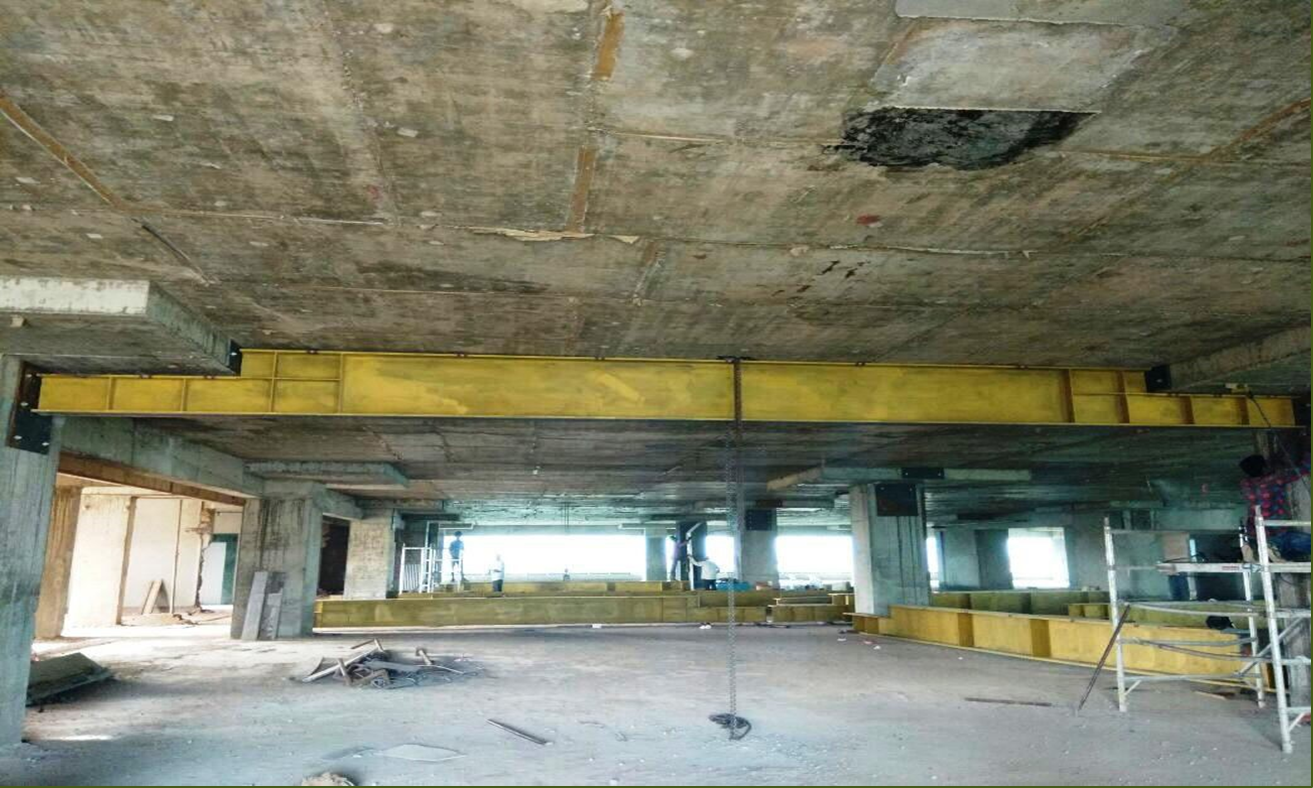
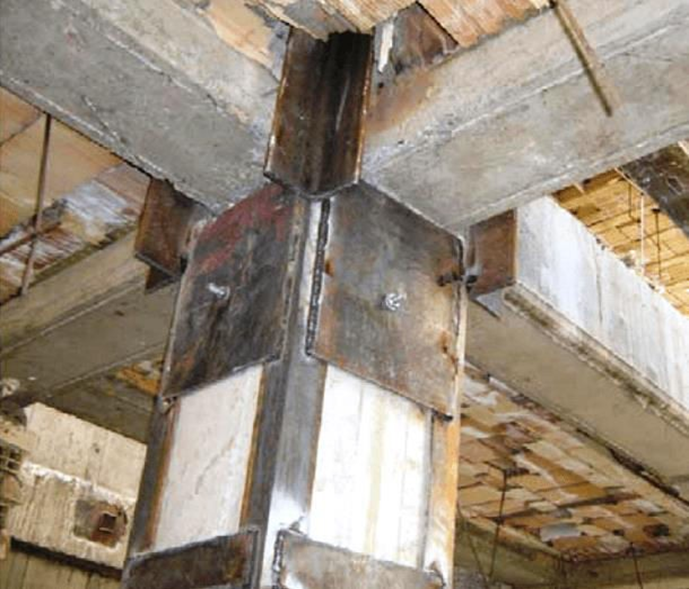
Retrofitting is a method of modifying existing structure with new components to resist the external and excessive loads. Retrofitting can be done to damaged structure or vulnerable structure.
Unicon is proficient in executing retrofitting works through the different phases
- CORE DRILLING
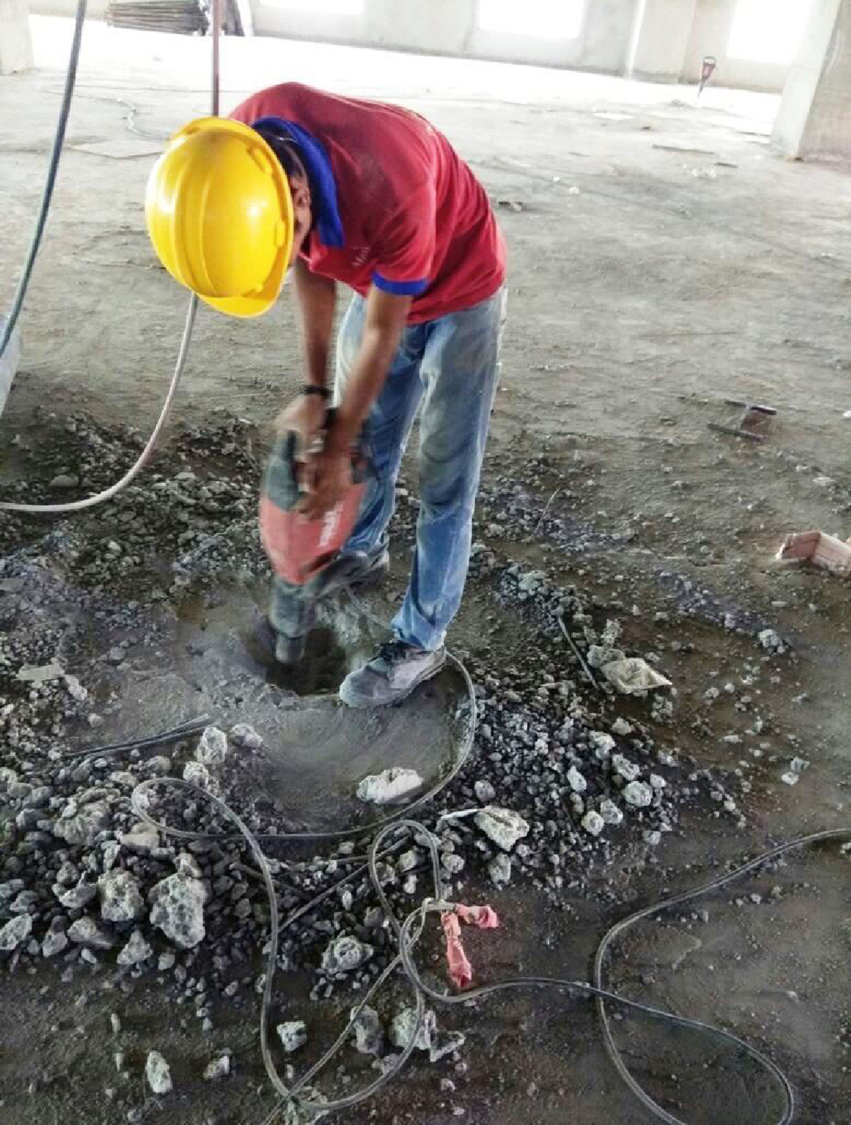
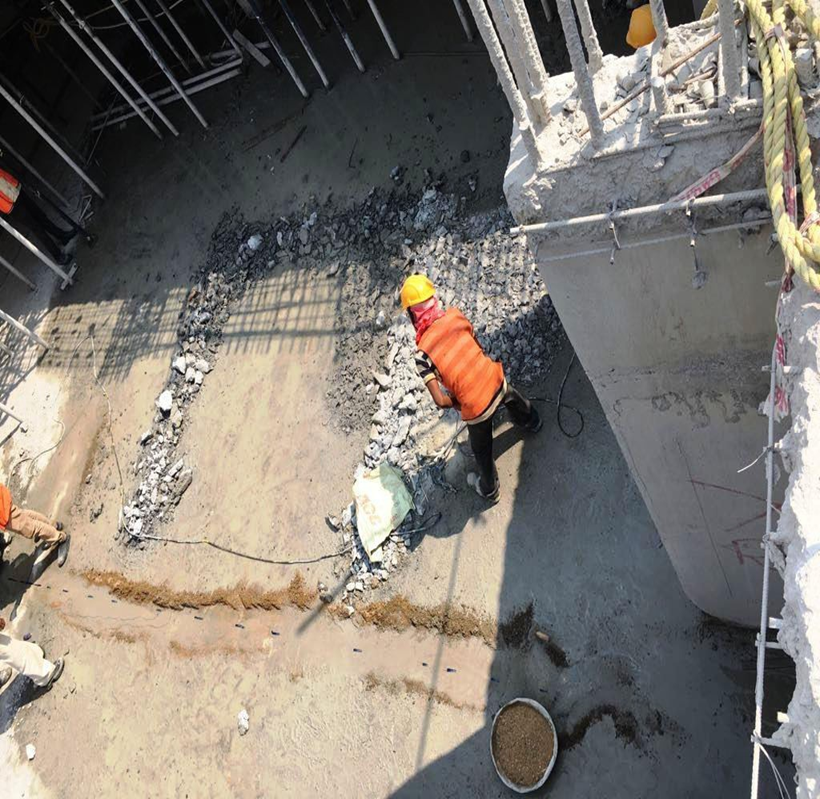
- JACK HAMMER / HYDRAULIC BREAKER
- DIAMOND BLADE SAW CUTTING
- DIAMOND WIRE SAW CUTTING
- REBAR FIXING
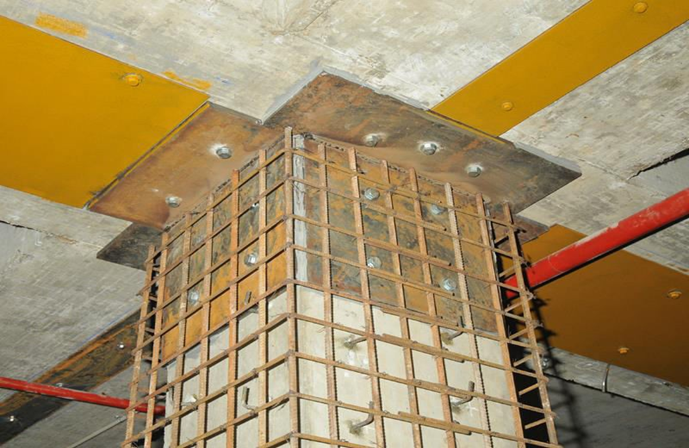
- COLUMN JACKETING / COLUMN STRENGTHENING
CORE DRILLING
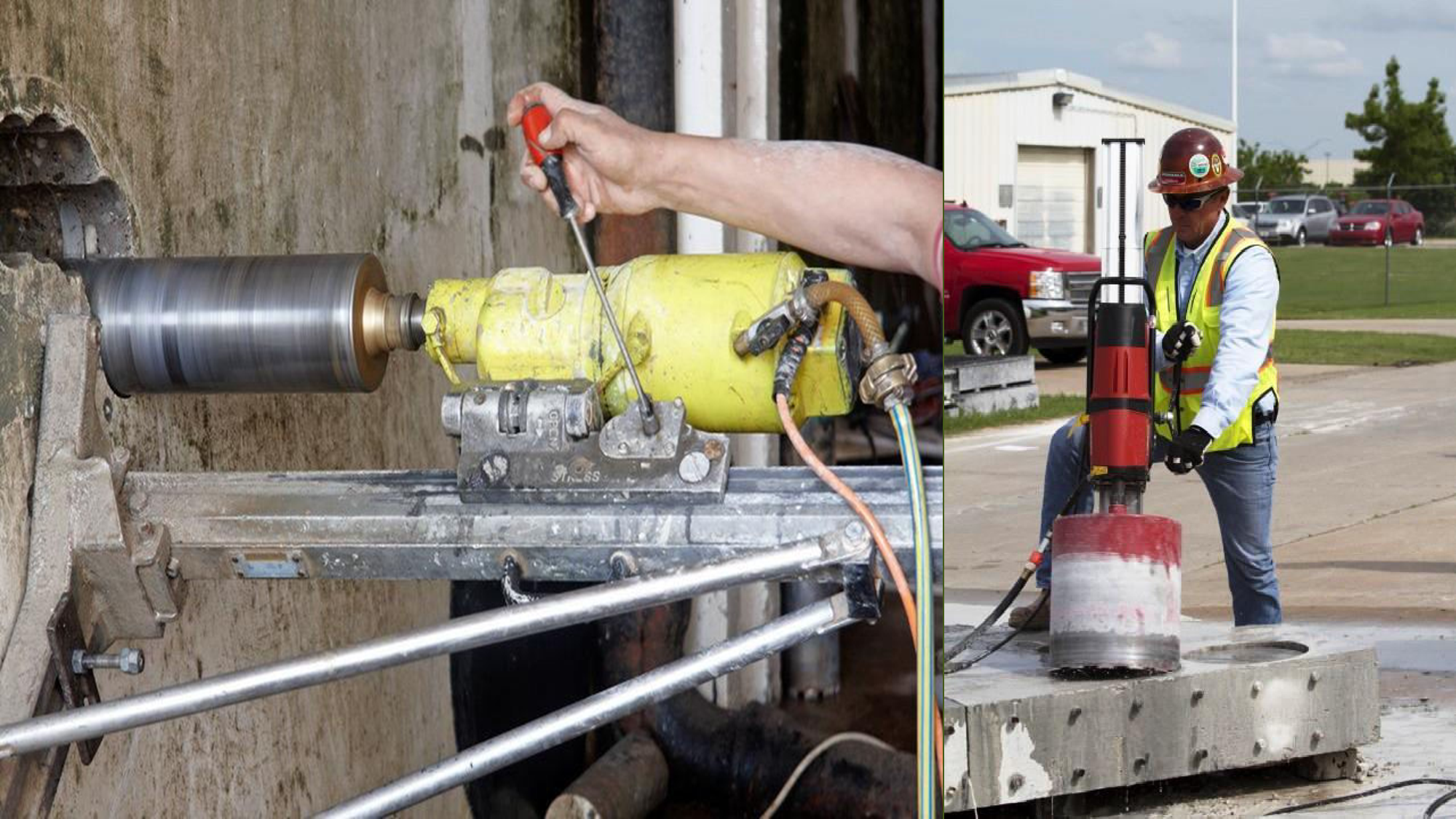
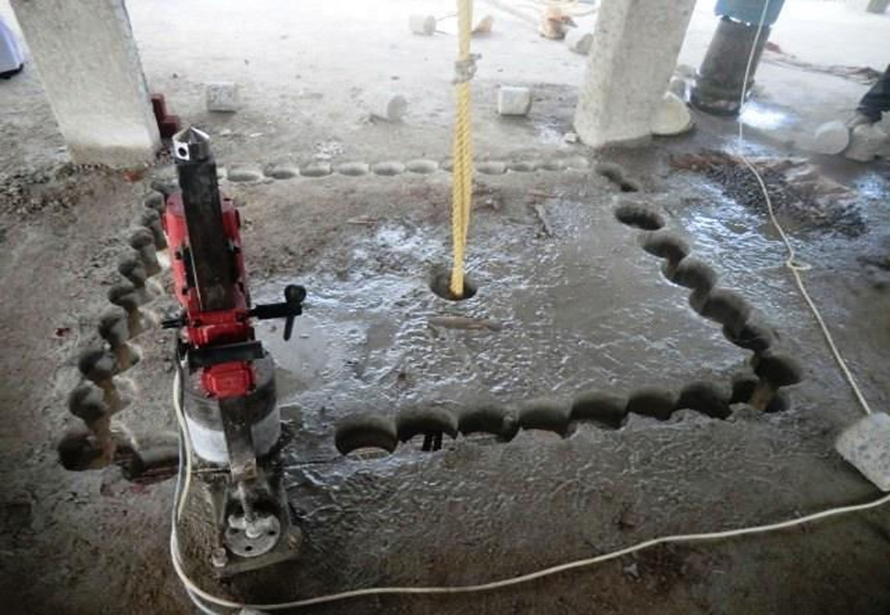
Core drilling is a type of service in which a drill is used to remove a cylinder of material, called a core.
- The Core drilling is performed when precise, circular diameter cuts are needed.
- Holes up to 72" in diameter can be drilled to virtually any depth.
- Core drilling is used for plumbing, electrical, and HVAC installations.
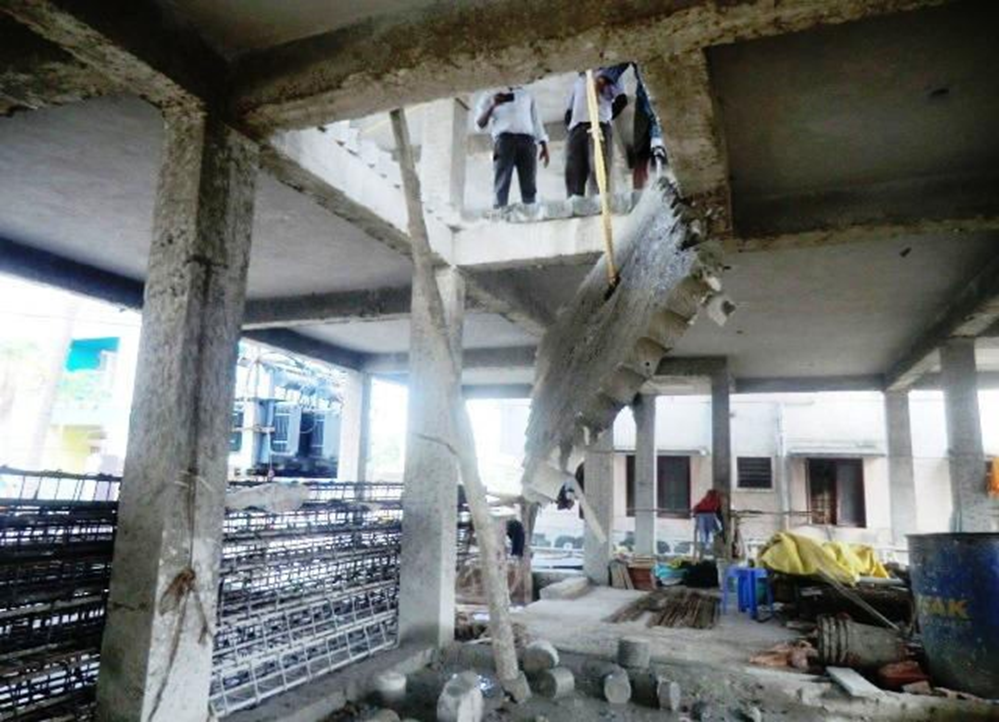
- Line drilling is an effective method for removing almost any thickness of concrete where other methods cannot be applied.
- Core holes are drilled in a series of overlapping holes, allowing for one large segment to be removed.
- Once the drill post is securely fastened, the next step is for the drill bit to be mounted.
- After the drill is properly mounted, it is turned on while water is applied as coolant and pressure is placed on the crank.
- The hand crank on the core drill itself drives the drill to the surface and cuts through the concrete.
- Once the surface and existing materials are penetrated, the core comes out with the bit, or the core can be pulled out manually if it is found in a slab.
- From there the coring of the hole is complete and additional holes can then be cored if need be.






JACK HAMMER / HYDRAULIC BREAKER
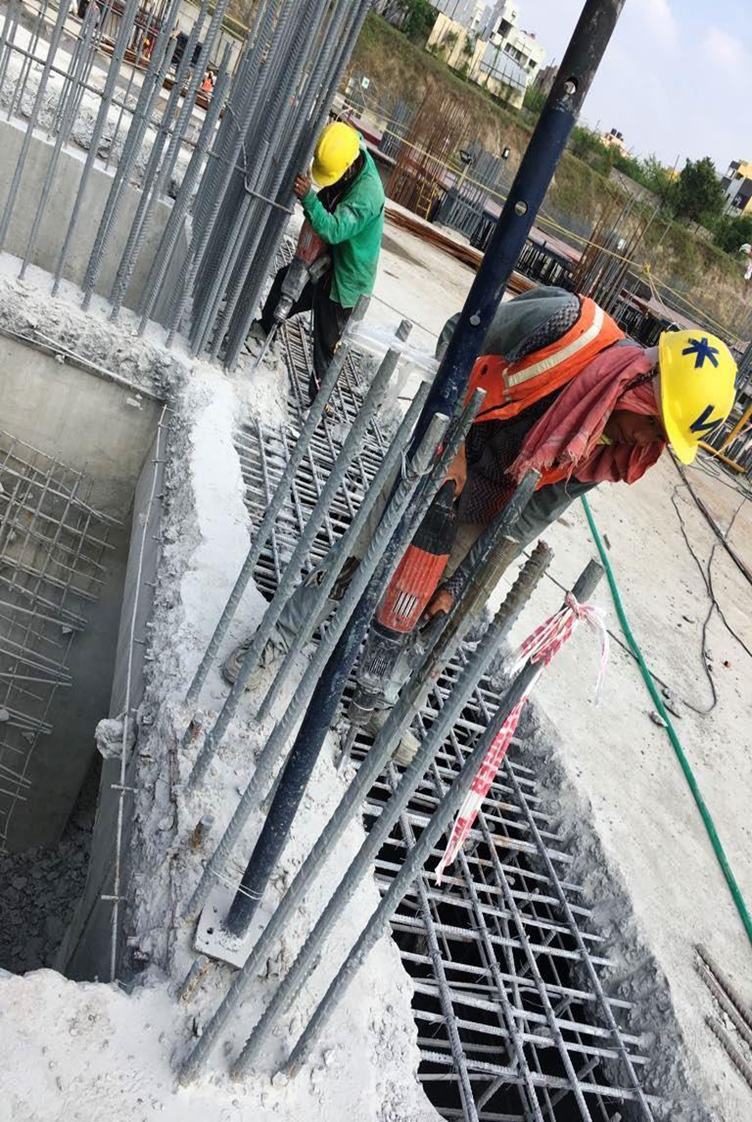
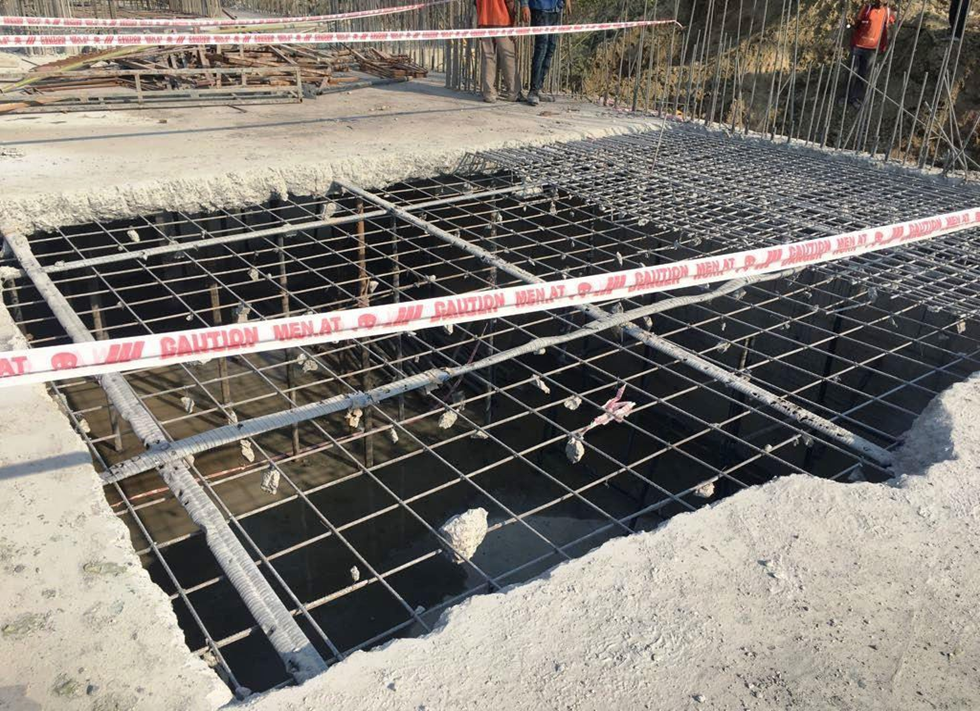
- Breaking up concrete at commercial, industrial, and residential properties.
- Removing an unwanted sidewalk or driveway
- Deconstructing a concrete foundation
- Removal of concrete from a construction site or concrete cutting project
- Most projects requiring concrete breaking and removal services begin with the most effective method of breaking or demolition, depending on the job.
- Concrete foundation demolition.
- Sidewalk or driveway removal and/or selective breaking and removal
- Large-scale concrete removal from industrial construction sites.





DIAMOND BLADE SAW CUTTING
Types
- SLAB SAW
Slab sawing is done with a walk-behind machine with a circular blade. Making some of the deepest cuts possible with the use of a slab saw. When an opening is cut with a slab saw, other specialized tools and equipment may be needed to actually remove the section of concrete, making this a job for well-equipped professionals only. - TRACK MOUNTED WALL SAW
Large wall cuts are best performed using a track-mounted saw. The saw is kept in place by a large frame and track, which it slides along horizontally or vertically for a perfect cut. The cut is always square and precise. - Concrete wall cutting requires specialized equipment and expertise. In stark contrast to other removal techniques, wall sawing uses low vibration, which minimizes collateral damage when removing concrete from an existing structure.
- Are configured for almost any angle to aid in the extraction of waste slabs.
- Make very precise cuts up to 33 inches deep without over-cuts.
Wall sawing can be performed up to 30" deep indoors or outside. cutting can also be performed from both sides of the wall, giving a total depth of up to 60". Specialized applications such as finishing roughed-in walls can also be performed. The wall sawing unit is highly portable and easily set-up system.
- Cutting area must be marked properly.
- The Rail Supports must be supported by using Anchor fastener in concrete slab.
- From the cutting line 230mm distance we have to fix the rail and mean time for next cut anchor must be provided to enable to shift rail further.
- Now we have to mount saw head on the rail.
- On saw head the blade to be mounted according to depth of cutting.
- Can be operated the machine remotely.
- Blade should be covered with blade guard.
- We have to make connection between Saw head and Hydraulic unit.
- Initial guide cut to be made at 4-5 cm for trailing purpose.
- After guide cut main cut will be made 10 – 15 cm.
- Once cutting is over reset to be done for another area.
- Every cut pieces lifted by us and disposed outside the premises.




DIAMOND WIRE SAW CUTTING
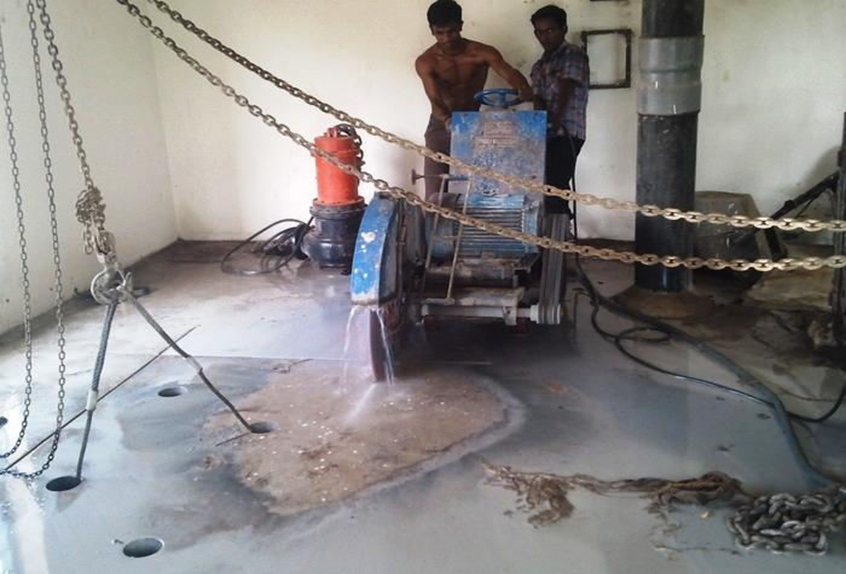
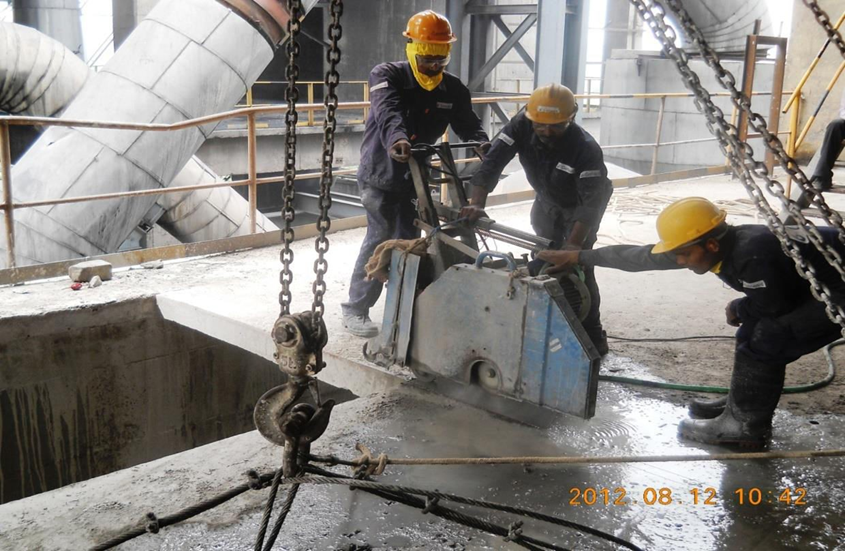
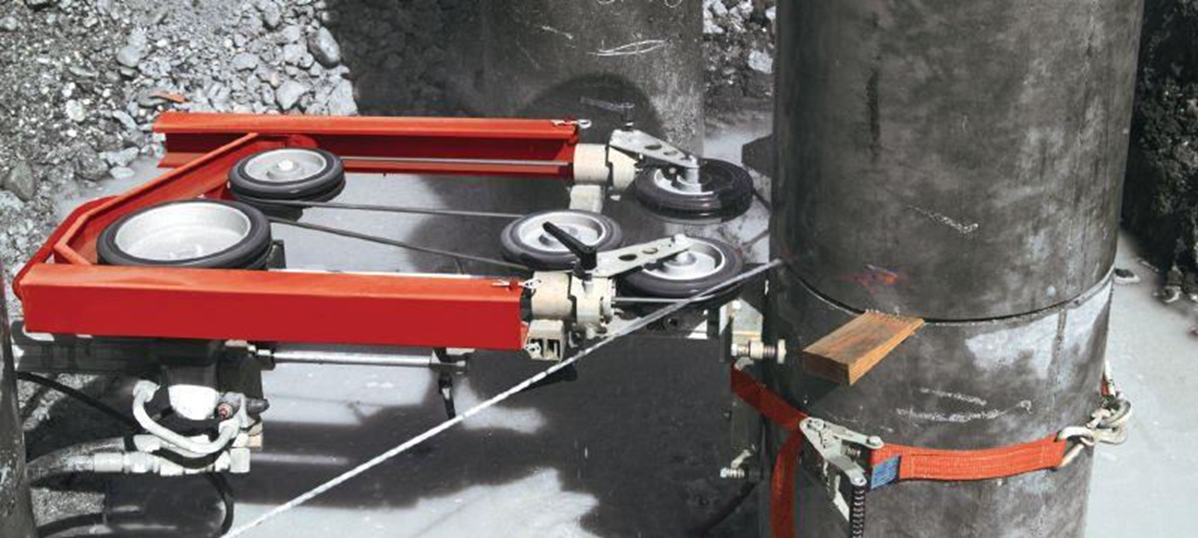
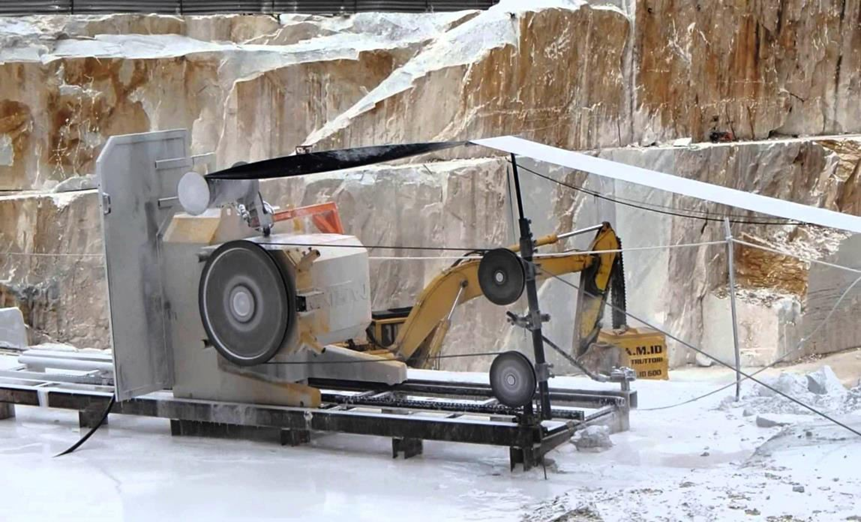
The wire sawing system uses a series of guide pulleys to draw a continuous loop of diamond studded wire through a cut. The system can be configured to fit into confined spaces and is ideally designed for cutting large concrete and steel structures.
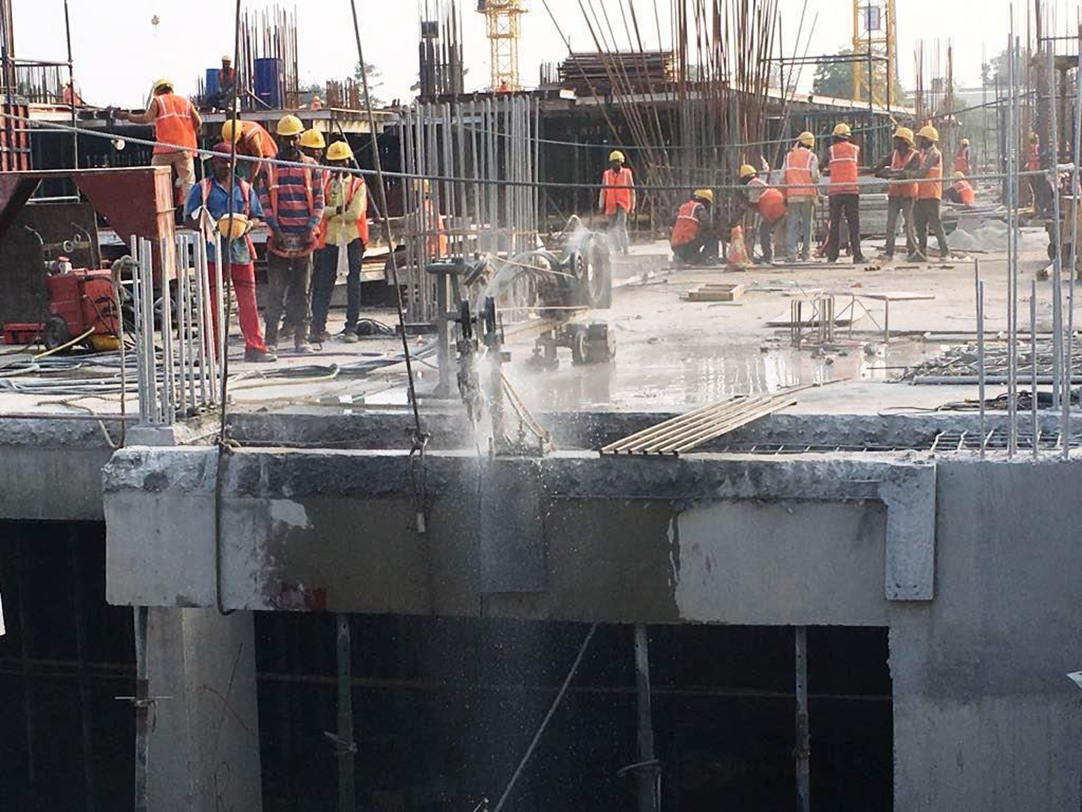
- RCC CUTTING USING DIAMOND WIRE SAWING SYSTEM
- ROCK CUTTING WORKS USING DIAMOND WIRE SAWING SYSTEM
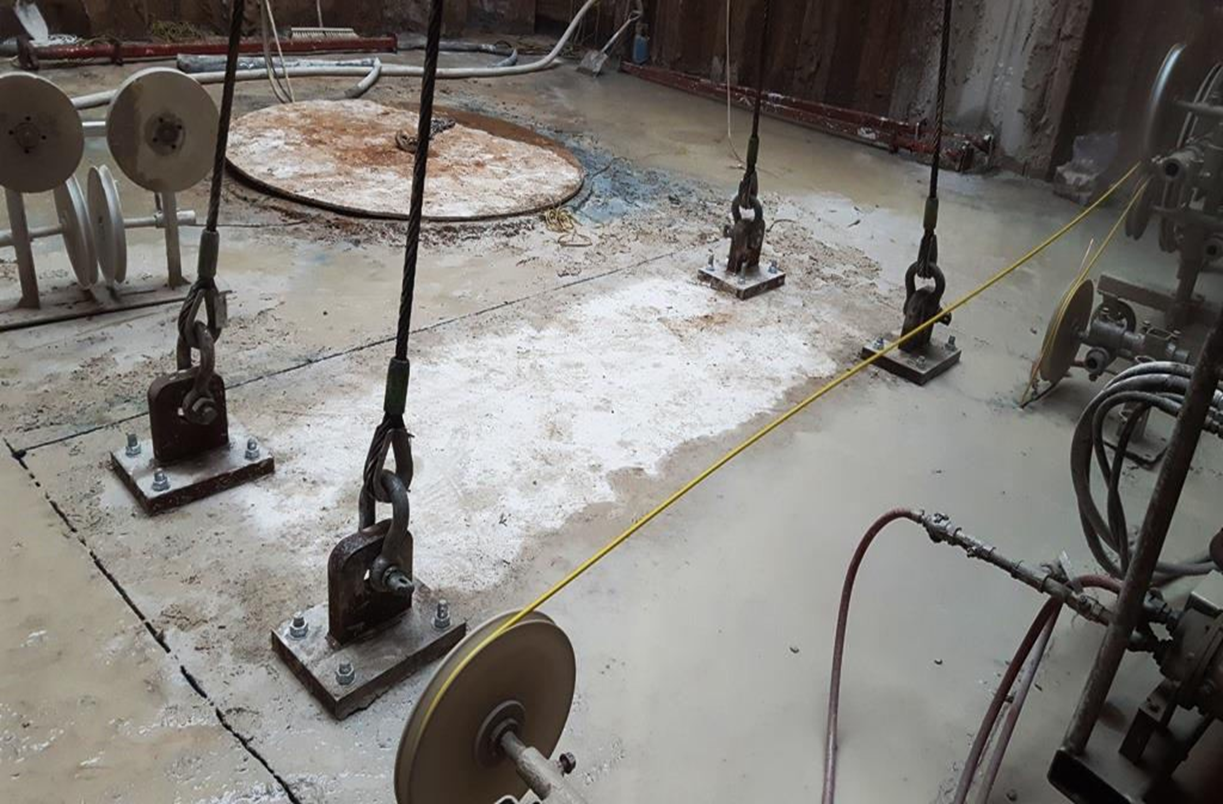
Wire Sawing System (Pulley Arrangement) to be fixed on to the existing piles at the level of cut. Core Holes to be made on the side walls / Plates to a depth of 1.6mts of dia. 162mm. - Plunge Pulleys to be inserted from this core cut holes.
- Pile to be held appropriately from the top to avoid any movement during sawing.
- Wire to be rolled over the pulley & cutting to commence.
- Wedges to be inserted into cuts at regular intervals to avoid piles from setting on the cut area.
- At the end of the cut, Pile to be lifted from the op & removed.
- Repeat the same sequence for individual piles.
- Wire to be rolled over the pulley & cutting to commence.
- Wedges to be inserted into cuts at regular intervals to avoid piles from setting on the cut area.
- Divers are required to do underwater drilling to fix anchors & align the pulleys in proper position.
- Power supply required: 3 power Amps. Machine power consumption: 32 kW.
- Wire sawing is used when a massive volume of solid concrete and steel needs cutting. We use a diamond reinforced wire and pulley system which is routed around the mass and back into the machine, allowing huge cuts to be made in less steps than traditional sawing methods.
- Large volumes of concrete with steel beams and rebar can be cut with this method, making it a huge time saver in certain situations.









REBAR FIXING
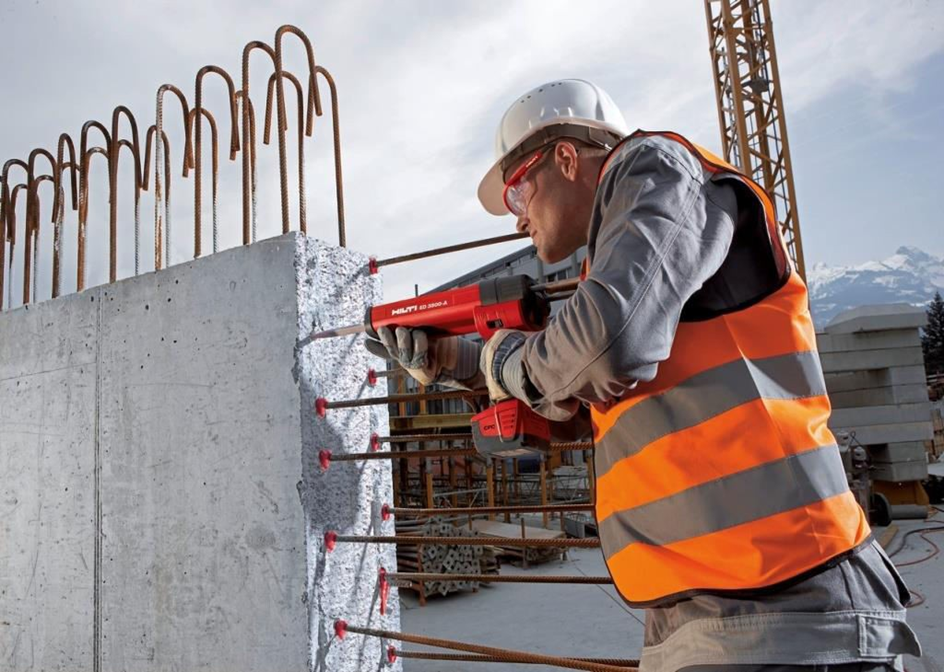
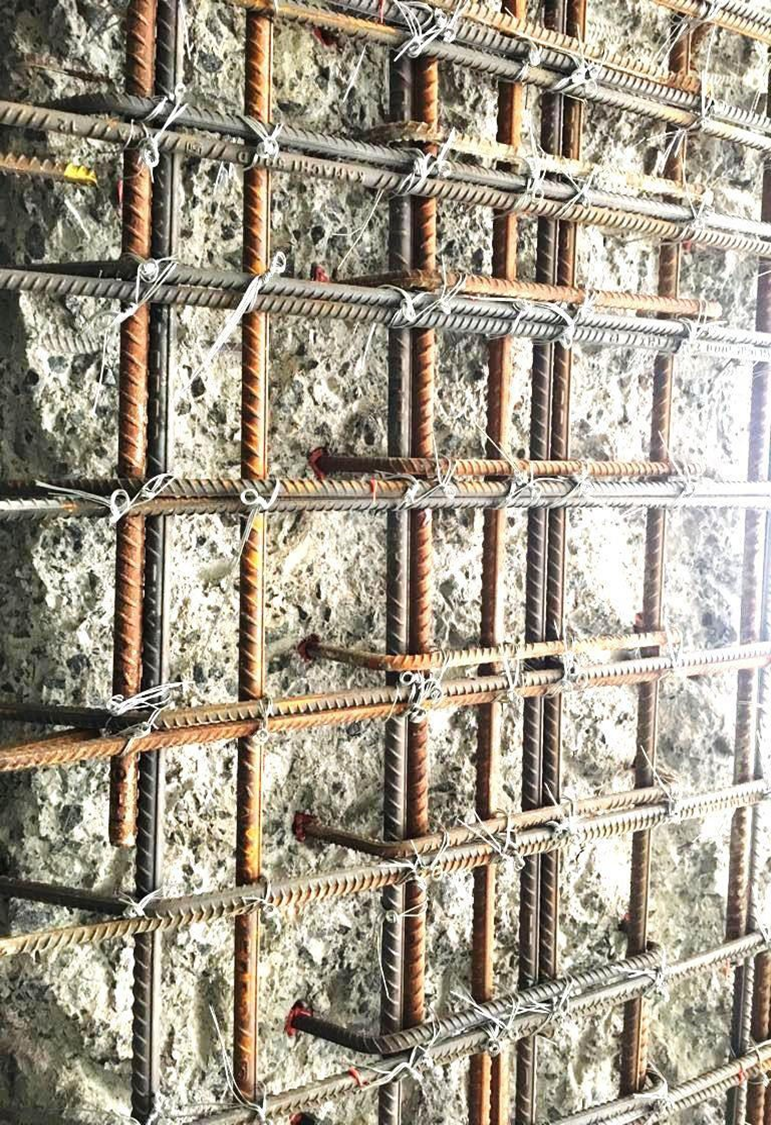
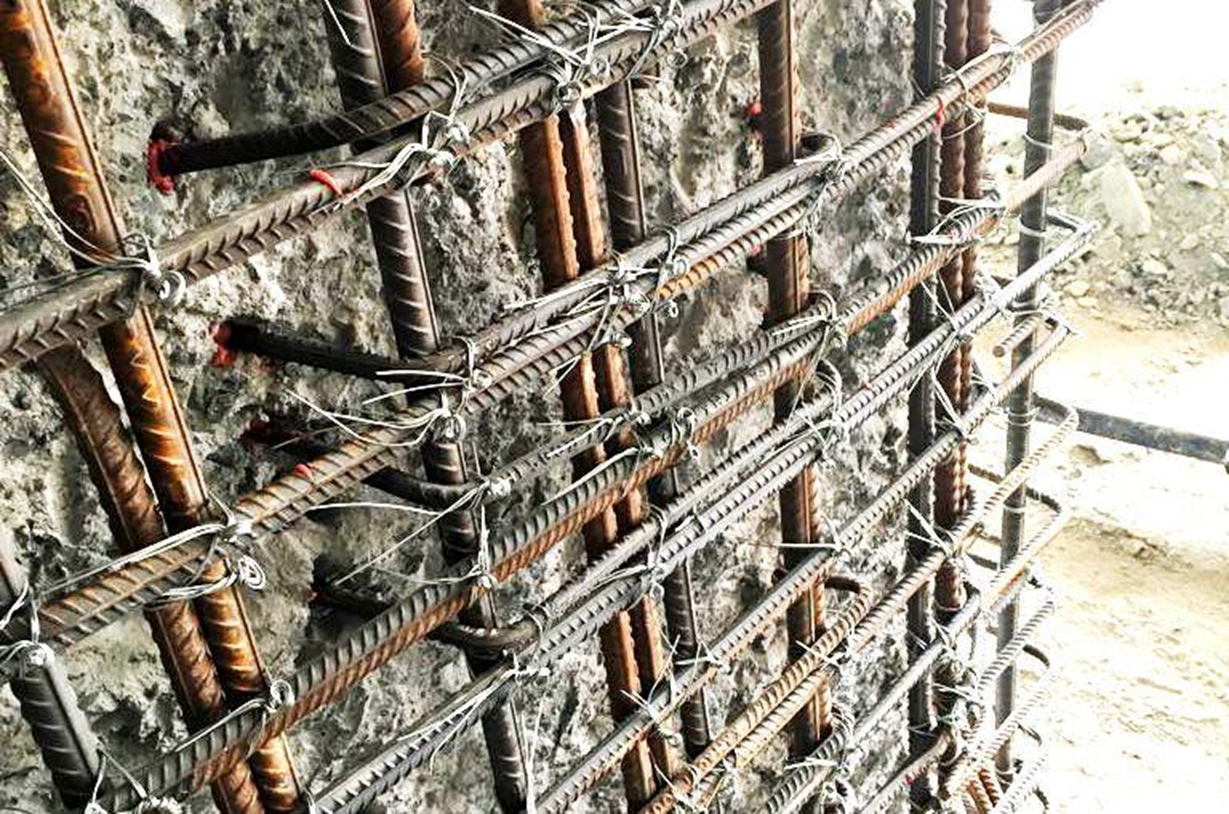
- Select appropriate diameter and hole depth to be prepared according to the requirement.
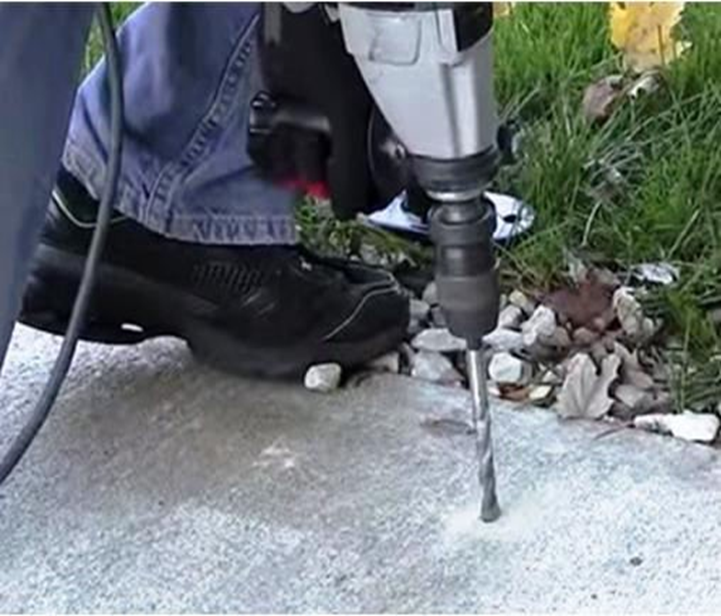
- Necessary drill bit shall be selected according to requirement of diameter and hole length (As per recommended)
- Drilling hole to done at necessary marking as prepared by designer.
- Blow out the fine dust through blow pump/compressor.
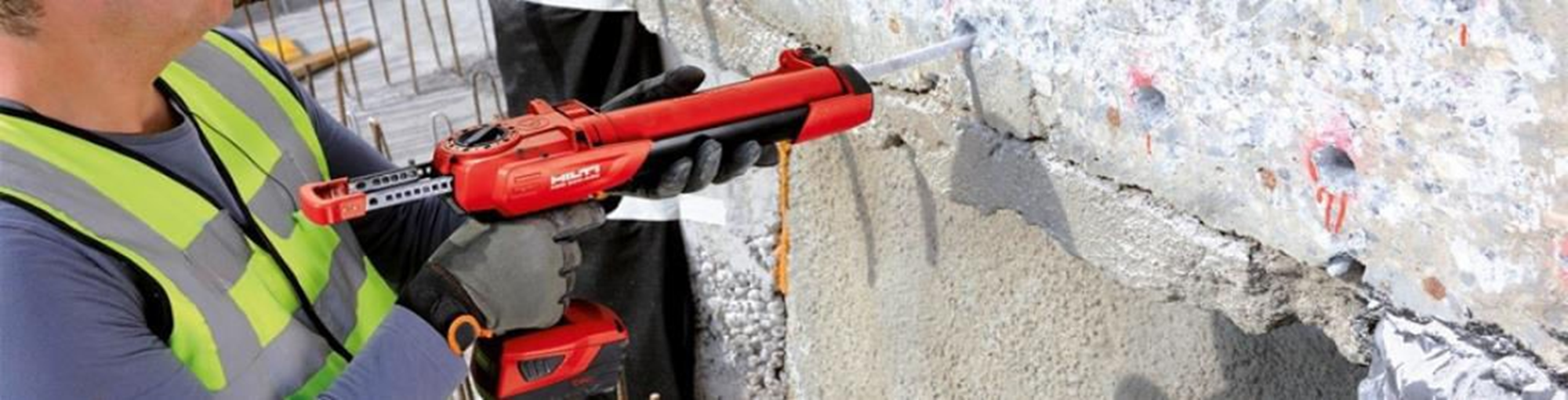
- Inject the chemical (Hilti RE500SD or as recmnd) inside the prepared hole using proper utensils.
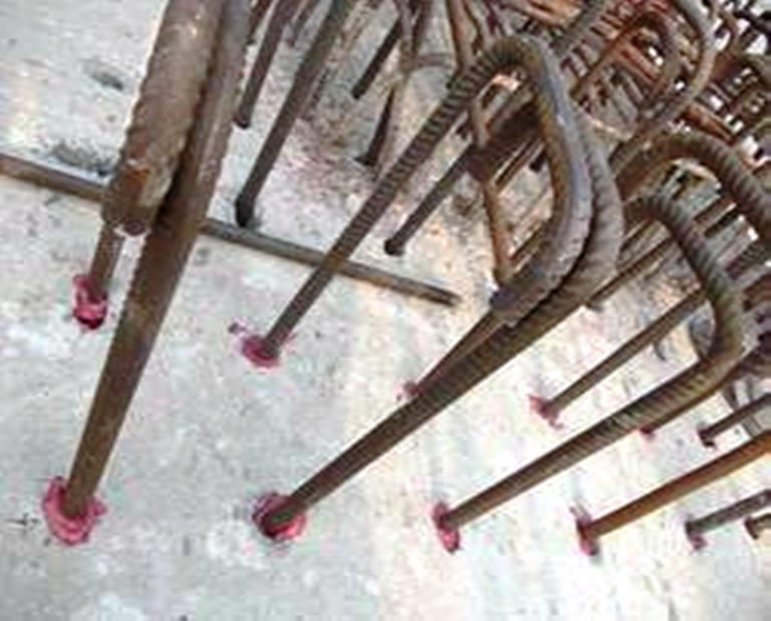
- Insert appropriate rebar (as recmnd) inside the hole with a rotary motion so as to avoid blow holes.
- Do not disturb the system till the gelling time of the chemical (approx. 5 min @ ambience 250 C).
- Loading of rebars to be done after achieving the curing time ( approx. 25 min @ 25°C)
- Ensure Safety measures which is demanded at site.


COLUMN JACKETING
It’s most popular method for strengthening of building columns.
Objective:
To improve strength, stiffness and ductility of the element
- To increase concrete confinement
- To increase shear strength
- To increase flexural strength
- Concrete jacketing
- Steel jacketing
CONCRETE JACKETING
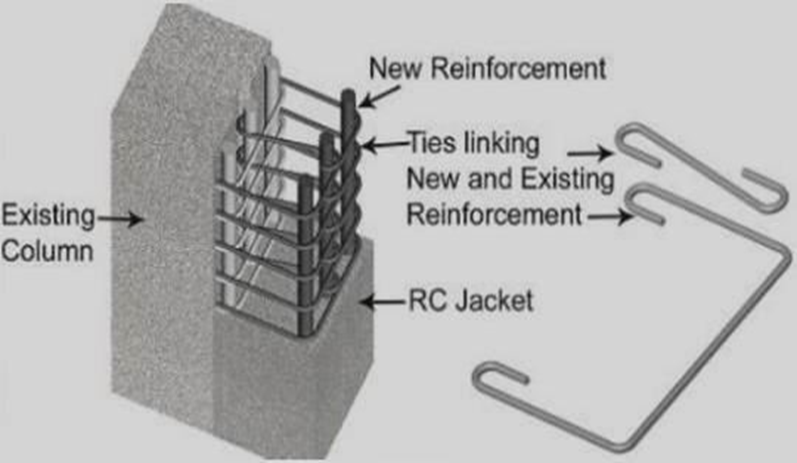
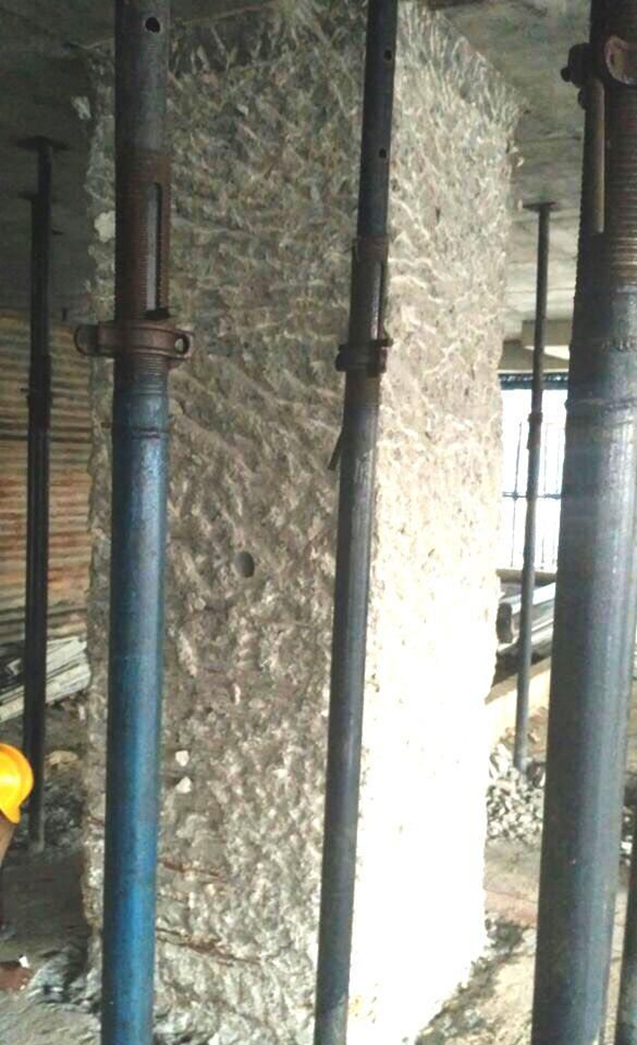
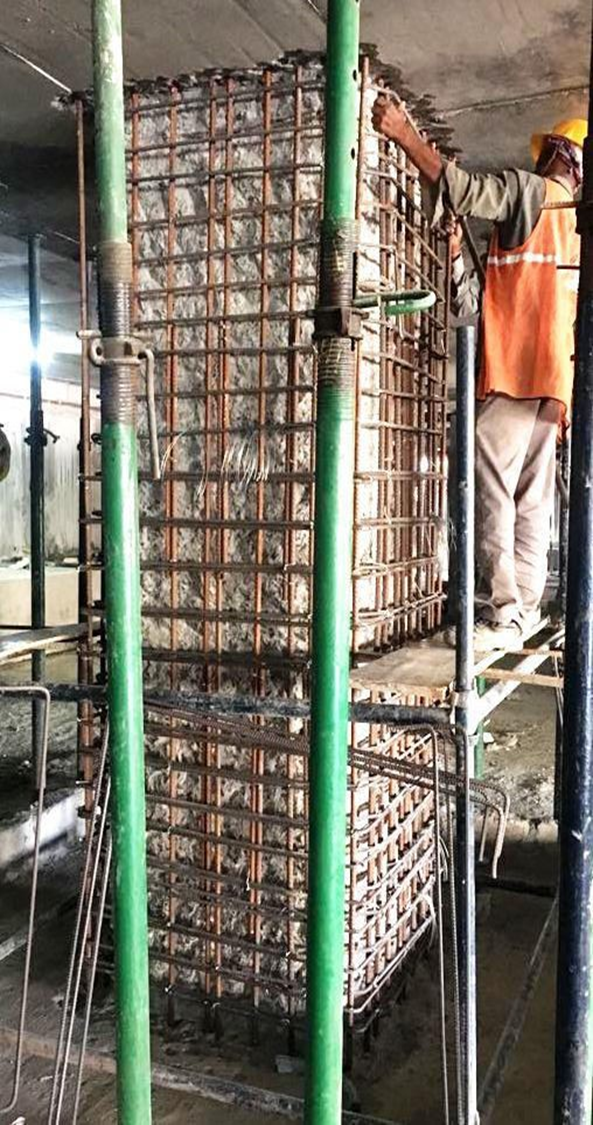
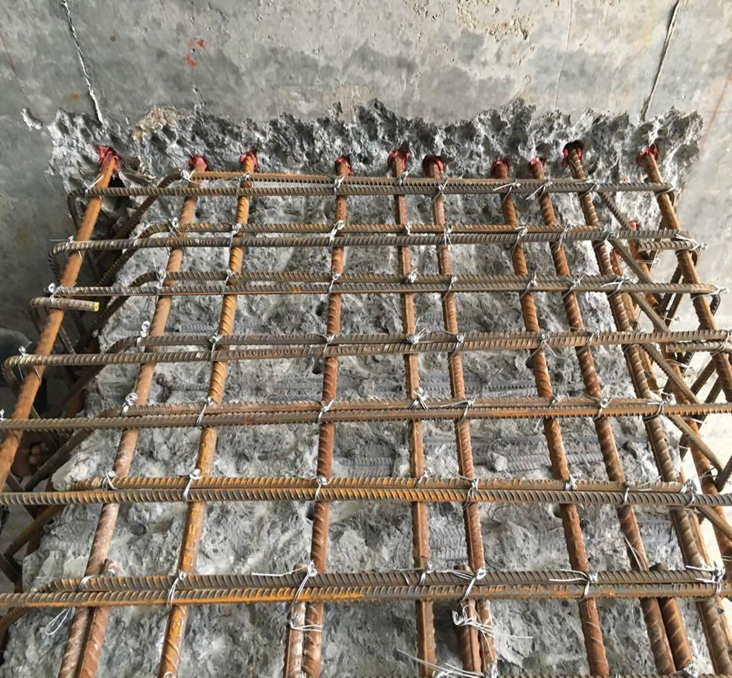
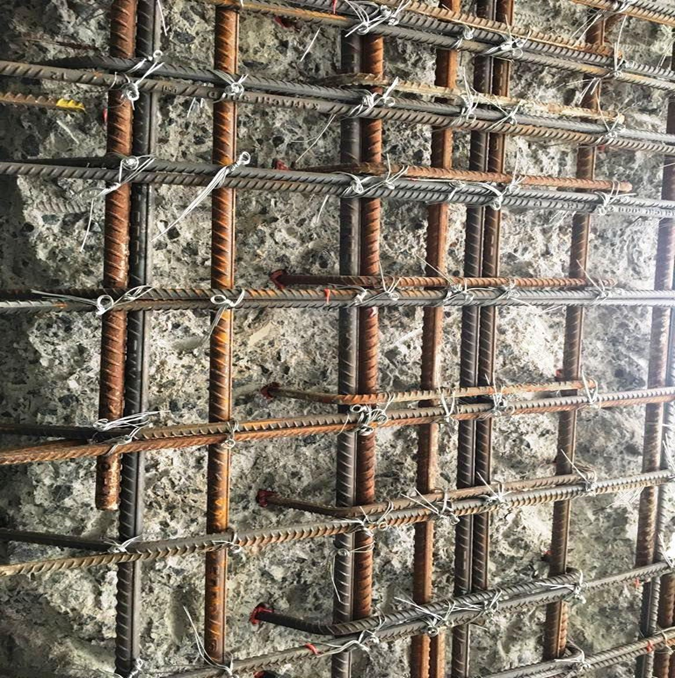
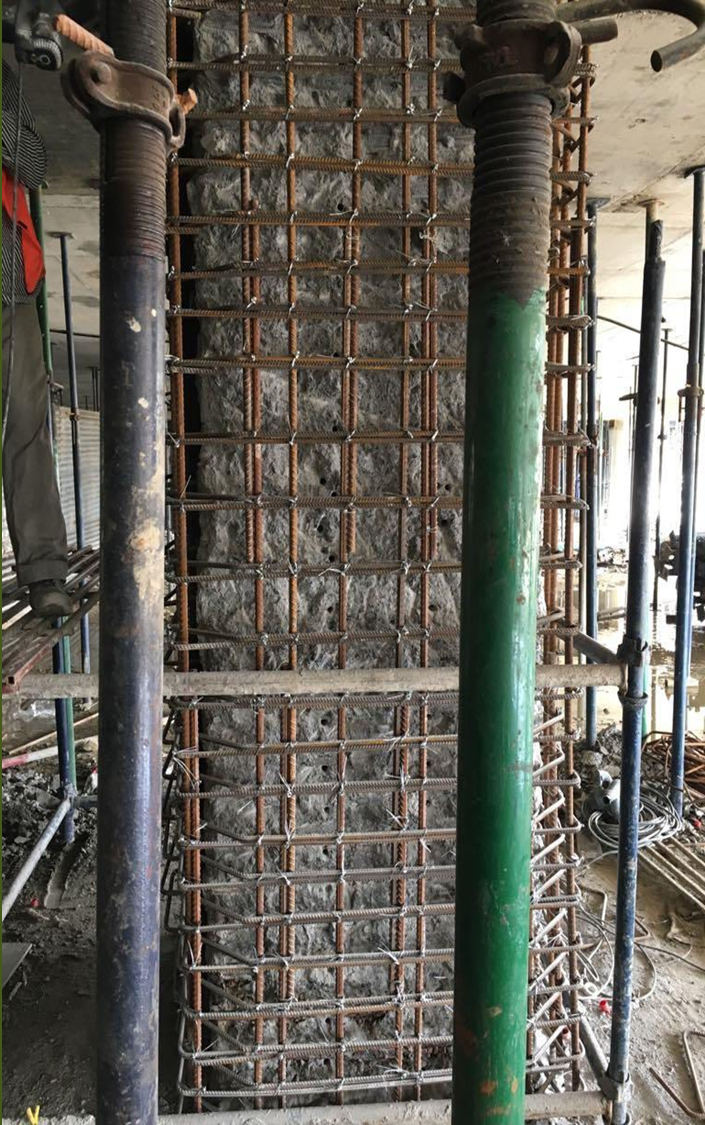
Hack the Existing column / Footing / Roof slab surface by hand chipping of any other methods also chip the corners of the Existing column by 40mm or as recmnd.
Example:Drill 16mm Dia. & 150mm Deep holes into the Existing column at a interval of 100mm c/c in lower zone and 150mm c/c in central zone.
- Drill 16mm Dia. & 150mm Deep holes into the Drill 24mm Dia. & 250mm Deep Holes into the Existing Footing for taking all new longitudinal rebars.
- Drill 24mm Dia. & 250mm Deep Holes into the Bottom of Existing top floor Slab for taking all new Longitudinal rebars.
- Make provision to Pour Concrete By cutting a core of 50mm Dia. one on each face of the column on the top of the slab core shall be taken without disturbing the Existing rebars or Tendons by conducting Profometer test.
- Clean all the holes and surfaces by wire brush and jet of water to remove all the loose and dust particles.
- Anchor the Shear connectors of 12mm dia. into the Existing column by Grouting the Epoxy bonding agent or As per Spec.
- Place all the New Longitudinal Rebars into the holes made in the Footing and the bottom of middle Basement floor slab by grouting the Epoxy Bonding agent.
- Tie all the new longitudinal rebars with new Transverse ties at 100mm & 150mm C/C intervals and diameter.
- Apply Bonding agent to the hacked surfaces of column / Footing and bottom of slab.
- Erect the Shuttering with proper cover blocks tied to the longitudinal rebars.
- Pour the Micro concrete of EMACO-S346 Grade from the hole made, Make sure that all the required area is filled with Micro concrete of specified Strength.
- Any Gap Between Bottom of Middle Basement Floor Slab and Column junction after curing should be pressure grouted and cured.


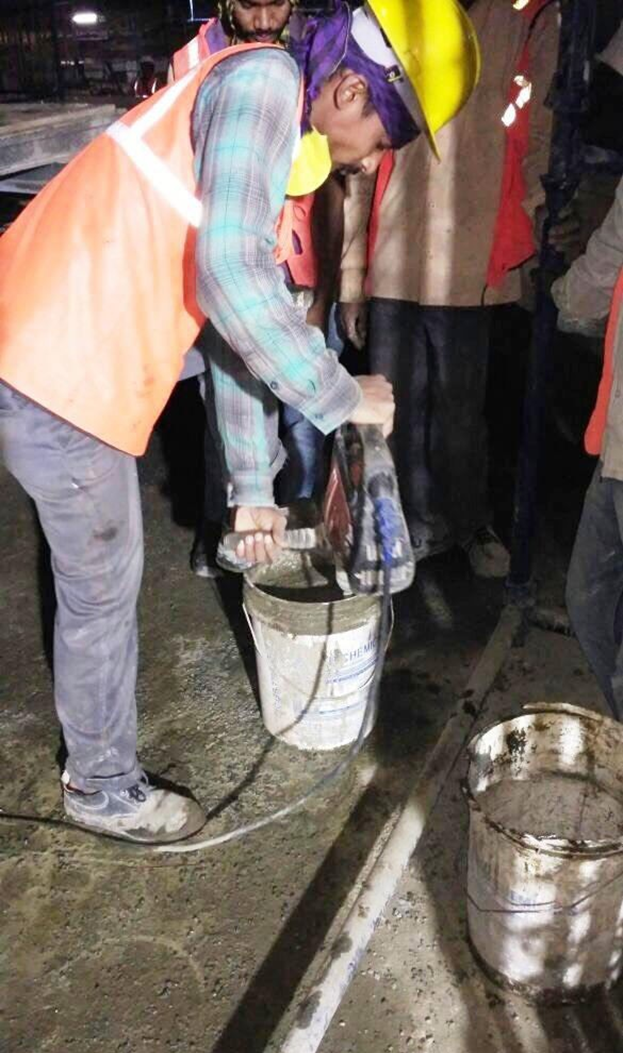
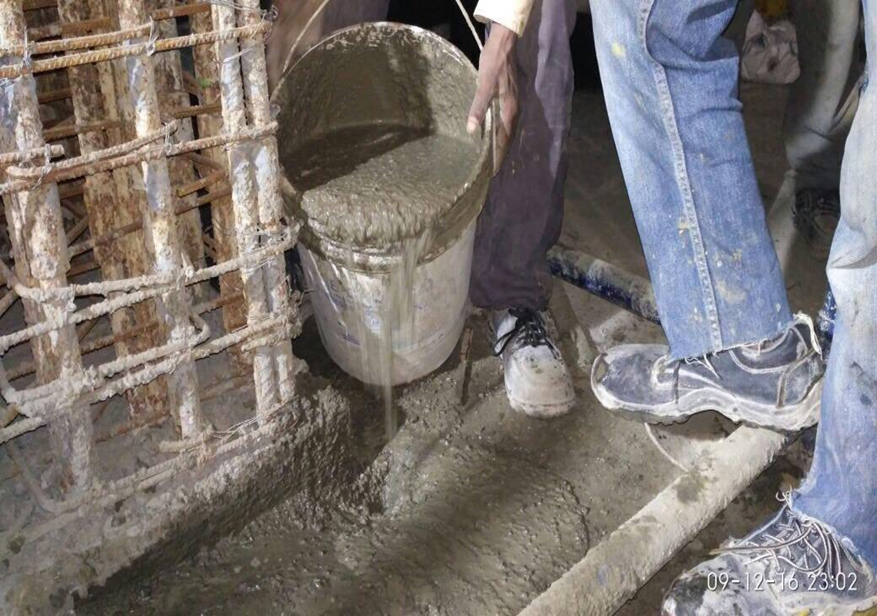
ADVANTAGES OF MICRO-CONCRETE FOR COLUMN JACKETING
- Gaseous expansion system compensates for shrinkage and settlement in the plastic state.
- Can be pumped or poured into restricted locations.
- Fluidity to allow for placement without vibration.
- Rapid strength gain to facilitate early reinstatement.
- High ultimate strengths and low permeability of cured.

STEEL JACKETING
- Steel jacketing refers to encasing the member with steel plates and filling the gap with non-shrink grout.
- The jacket enhances both flexural strength and shear strength of concrete.